Tuesday, April 24, 2012

The Existential Order of the Internet

Real estate on the internet is primarily defined by its content. More so than for physical locations, which are bound to their proximity to other things and consequently more heavily influenced by their context, what matters most for websites is what they contain. Because the elements of the web are free-floating, and because the infrastructure exists to so easily facilitate it, human agents on the web break down into a few fundamental categories based on how they interact with content.


Consumers

This is the most passive of the categories. Spend most of your time online watching Netflix on your iPad, browsing your Facebook feed or catching up on headlines? Then this is probably you.

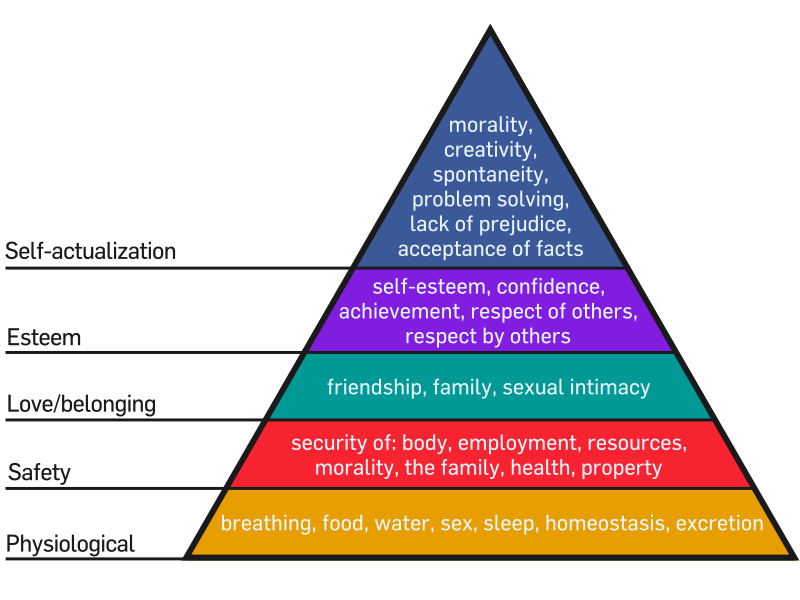
The level of passivity each role exhibits diminishes as you ascend the pyramid. As for many material products, consumers tend to outnumber suppliers and producers on the internet too. Of course, how passive you are depends on the category of content we're talking about. But in the aggregate, you'll measure up differently compared to others, just as in the broader picture people can be closer to net producers or net consumers.

Disseminators

You can be an exclusive consumer, but except in the case of distributing content you've never even fleetingly examined, disseminators are consumers too. The crucial difference is that in addition to internalizing content themselves, they pass it along to others. You're a disseminator if you regularly share memes or repost your finds to Tumblr, Pinterest or a similar service.

Disseminators are similar to the Connectors and Mavens of The Tipping Point. More accurately, they don't just spam communities but have the sense to know what others will find appealing or, on occasion, viral. If no one reads your second-hand content, you're really just a consumer.

Originators

This hierarchy can really apply to any creative production. Originators are the inventors and designers that produce new archetypes in the struggle for prominence. In the context of this article, they are the bloggers, vloggers, more legit personages and online artists.

This is the apex of internet existence, one in which you no longer constitute a spectator but play an active part in the construction of the digital world. It's the end that ambitious fans of any trade - digital or otherwise - aspire to, myself included.

A fourth category

Although this isn't incorporated into my model, a fourth (and maybe fifth) category of Disrupters/Destroyers could be reserved for malicious hackers and for those edge cases when more typical users dismantle content.

Exclusively "X"

In practice most people belong to each category, but some more than others. However, as alluded to above, it is technically possible to belong exclusively to one category. Consumers most easily of all. The exclusive Originator is an anomaly and perhaps a mad genius - a hermit who has no uptake from the external world but can project his vision into it.


I don't think a hermit's approach makes for a very good originator though. In my opinion, it's usually familiarity with a wide range of topics and their recombination that make the most interesting content. Just as in Maslow's hierarchy of needs it's possible for a starving artist to engage in the pursuit of his or her passions to the exclusion of physical needs, but most people operate on more than one level and for good reason.

Monday, March 5, 2012

Privacy, Accountability and Sustainability

Big names, big changes

Facebook's Mark Zuckerberg's vision of the future is one in which people relinquish more and more privacy. With the successive changes that Facebook has implemented and its virtual monopoly over personal networks, he's gradually succeeding in making that a reality. One of the initial groundbreaking aspects of Facebook was its convention of displaying users' real names, as opposed to the fabricated usernames of more anonymous contemporaries, such as AIM and MySpace. That sparked the gradual process of deprivatization that today has culminated in the Timeline feature, which makes Facebook actions - particularly historical activity - more visible than ever before.


Zuckerberg isn't alone in his campaign to open up our online lives. Google's new privacy policy now permits greater sharing of private data across its network of companies.

Encouraging the greater disclosure of private information certainly makes sense for Facebook, Google and other businesses. They're no doubt looking for better indicators of individual preference, in order to make their ad services easier to customize, more effective and more appealing to advertisers.

There are also benefits to reap from the network effects of having more information visible. Tracking and broadcasting users' actions across a site generates more content and makes users more invested. It was the feature I recall as most controversial - News Feed - that transformed Facebook from a social networking utility into an entertainment destination. New features aim to similarly increase the amount of time users are on the site.

One big murder mystery

But what does online privacy have to do with sustainability? One of the obstacles to sustainability - and to any undertaking in a large society generally - is establishing accountability. In a complex, dynamic society such as ours, the volume of actors and interactions enables anonymity, which can undermine accountability.

To understand how anonymity can degrade accountability, destroy trust in society and pose challenges to it, you need only look to con artists. It's the ability to travel to untainted markets that allows the snake oil salesman to continue peddling wares that fail to deliver. If would-be victims could consult Yelp or some other fair assessment of the product or salesman, he would soon be unable to profit from fraud.

Along those same lines, The Economist recently presented a strong argument for why limited liability status shouldn't enjoy anonymity. Among other things, the combination permits entrepreneurs with a record of failures to conceal their past and, quite possibly, their incompetence, and makes lenders generally less willing to lend.

How do I know I can trust you?

Anonymity wasn't a problem in early societies and still isn't in sufficiently small or close-knit ones. Where communities are too big, mobile or loose to base trust on personal experience or communal knowledge, we have had to address the problem of anonymity by establishing alternative measures of reputation: brands, credit ratings, permits, certifications, criminal registries and other signals. In place of direct or second-hand experience, the solution has been to use technology to establish transparency. If current trends in privacy continue, we'll be able to do that much more effectively in the future.


As regards sustainability, the challenge has been in establishing what damages have been inflicted on the environment by whom. One part of this dilemma can be solved through science, by more accurately defining the health implications of a practice or substance. The other must be redressed by linking agents to the often nebulous environmental repercussions of their actions. The environment suffers because of the tragedy of the commons and the only way to resolve it is to establish a clear connection between individual actions and outcomes.

The above examples illustrate the trade-off between privacy and accountability, but it can permeate any sector of life. How can I assess performance if decisions are largely closed-door deals? How can I know whose interests a politician represents if he's funded through a faceless super PAC? And how can I know whether an employee or my kid's teacher is suited for the job if I cannot review and corroborate their past? In spite of these doubts, full transparency is not always desirable.

Challenges to transparency

Even though greater openness can minimize risk and deter crime, there are also justified reasons to oppose it. If you're a law-abiding citizen who doesn't conform to popular norms - if you're a minority in some way - that may be reason enough to advocate privacy rights.

Those reasons become further warranted when transparency is implemented asymmetrically. Imagine a case where potential victims of oppression or exploitation have the details of their lives open to scrutiny while the identities and doings of their oppressors remain unknown. This already happens. Intelligence agencies and secret police in authoritarian regimes are able to uphold the status quo partly because they exist in shadow, inoculating their members against individual culpability.

An Afghan officer using anonymity to her advantage.


The prospect of change and the imperative to forgive

Perhaps the most compelling reason to resist the dismantling of privacy, however, is its implications for the capacity to change one's life. Transparency already limits opportunities for ex-cons, which serves at least theoretically as a deterrent to would-be criminals, but consider apparent law-abiding citizens or victims of circumstance.

In The Road to Serfdom, economist Friedrich Hayek argues that one of the most crippling aspects of living in a communist society for both the individual and the economy is the lack of prospects, the virtual inability to alter one's position. Could extensive transparency in a free market democracy similarly limit the capacity for self-reinvention and sentence individuals to their fates earlier in life? It's a consideration that forces one to wonder at which point we're best equipped to make decisions and whether weighing earlier ones will make our lives more a function of our initial environments.

The need for feedback

There exists an optimal balance between privacy and accountability and it will hinge on delineating between what details are of import and which are not. Should it matter that I'm a Mormon? Should it matter what I download?

When it comes to material impact on resources, however, which is what public health and sustainability are fundamentally based on, I cannot conceive of an instance where that information should be kept secret. There's no justification for the Soviet Union delaying the news of the Chernobyl disaster or for private enterprise to underreport their resource use. Similarly, entities should get credit for improving quality of life where it is due.

I'm not a robot

But information on its own isn't enough. Many of us - including myself - often operate according to what's in our immediate interest, what we can get out of the system for ourselves with the least input, if at times at the expense of others. I shouldn't expect greater visibility on its own to compel people to act in the best long-term interests of what they hold dear.

At the same time, we often make decisions based on emotions and unexamined desire. I contend here, as I have before, that people are a social animal, willing to do that which will elevate their status in the eyes of those whose opinions they value. At that point, it's no longer about the environment as much as it is about sharing a common identity and showcasing accomplishments within that framework. I may not actually care about sustainability, but may care only about the approval of others who profess that they do. By necessity, there will also be circles that define themselves by being anti-environmental, regardless of whether they genuinely care.

In order to propagate the sustainability mentality then, it is necessary to establish it as an esteemed lifestyle and leverage humanity's social apparatus to encourage people to pursue it. Luckily, I don't think that behavior is founded exclusively on competition for social status. People are capable of reason as well and I believe it is this that will decide the conflict with those who define themselves in opposition to sustainability.


Data drowning

The issue remains of how best to convey information in a world drowning in data. Science and education can impart us with a sense of what's better for health and the environment, but the key will be conveying information in a conveniently digestible and meaningful packet.

That's been the aim of the new environmental rating system for cars, which permits comparisons across electric, hybrid and conventional models. The ranking is communicated according to a grade letter system that consumers are already familiar with.

I envision that products in the future will universally carry an assessment of their ecological footprint, in much the same way foods already display nutritional information. I also wouldn't be opposed to wearing some indicator of my sustainability on my sleeve. If that proves too much sensory overload, then perhaps in the same way technology is helping generate and disseminate data, it will one day improve our ability to process that information.

But don't rely on it. A few professions that you're overwhelmed by the complexities of today's world can easily double as an admission that you're not fit to make decisions in your own interest.

Tuesday, February 21, 2012

Why is my biodegradable floss packaged in petrochemicals?

It's probably not a question that plagues you late at night but the short answer is the US government. A few weeks ago I wrote about my floss of choice. It's made of silk, which makes it nontoxic, renewable and biodegradable. That rose the question of why its so seemingly eco-minded manufacturers would package it in a plastic cartridge, so I shot off an email to Radius and here's their response:

The FDA considers floss a medical device and because of that they require anything that is sold in drug stores to be packaged in a plastic container. Since our products are sold in both drug stores and natural product stores we must abide by that law. We have considered creating alternative packaging for the natural product industry but since we also sell in drug stores we cannot have an entire cardboard container until the laws are changed.

I guess plastic packaging is one way to keep things sterile. And if it's plant-derived plastic that'll get shuffled into an indefinite recycling loop, then there's nothing technically keeping it from being zero-impact. But most plastics are still petroleum-derived, with Coke's PlantBottle as one highly visible (and recent) exception.


Is plastic really protecting me from my floss? It certainly can't be the first time the FDA's been off the mark. The typical tale is that regulations impede entrepreneurship yet are instrumental in protecting public health. I wonder to what extent regulation is impeding ecological sustainability.

Saturday, February 4, 2012

Cities for People and the Planet

In light of my recent post on green building projects in Italy, I've decided to highlight here a couple more videos on sustainable urban planning from TED.

First up is a talk by Ellen Dunham-Jones on how we can modify existing infrastructure to accommodate changing tastes and needs.


What I appreciate most about this presentation is its focus on working with what we already have, as opposed to uprooting suburban environments to build from scratch. That way we can address the challenge of sustainability without incurring superfluous costs. The goal is to minimize the inputs needed to reduce further demand on resources.

It also happens that I've translated this talk into Russian. It has only yet to be reviewed and approved by another translator per TED's quality standards. Any takers so we can get it up there?

Next comes a more recent talk on the perceived trade-offs between sustainability and quality of life. Bjarke Ingels helps break this false dichotomy by presenting on a series of projects that both benefit the environment and give people more opportunities to indulge.


Thursday, February 2, 2012

A Sustainable Hot Dog Restaurant in Brooklyn


Yesterday I spotlighted a grocery store and now it's on to restaurants. Awhile ago (actually a long time ago) I got the chance to check out this place - Bark Hot Dogs - with my friend Mark, who writes on urban policy for Forbes and whom you should check out. This title is actually the query I googled to rediscover it. TimeOut New York says it has the best dogs in town, but I'm more into the business idea.

For what is, in essence, a fast food joint, they do well minimizing on packaging and have eliminated persistent waste. When I was there, everything was biodegradable and our food was served up on these charmingly lackluster cardboard troughs.

Perhaps most interesting, they list all their suppliers on their site, under the aptly named 'Resources Menu.' Their culinary repertoire is biased toward nearby farmers, largely from New England, with an occasional western state in there.

Other highlights include that they acquire all their energy from hyrdoelectric and wind power via a local utility and convert their cooking grease into biofuel. For me this establishment is a vision of the future, illustrating how it's already possible through existing services to keep all outputs - including conventional wastes - in the production loop.

Wednesday, February 1, 2012

Paper, plastic or packaging-free?


In.gredients made ripples last summer when it announced that the completely packaging-free grocery store would open in Austin, Texas, making it the first of its kind in the nation.

The founders draw their idea from their experience starting and managing businesses. They've taken their focus on reducing costs and waste and applied it to sustainability, targeting an add-on with often dubious value-added. If you do end up buying whole grains on a whim, they'll provide you with a biodegradable container.

So far the project's secured its financing, location, permits, and most of its supply chain. All that's left is the renovation of the space (with recycled materials, of course) and they'll be open for business. Their choice of location, amid a food desert - an area lacking grocers, could prove a boon.

I'm a little surprised this idea hadn't already been conceived and implemented, as it makes sense from both business and environmental perspectives. Unfortunately though, unless you're in Austin, you're not going to find a zero-waste store near you.

But you can get the next best thing. I've already shared one sustainable shopping guide, but this one focuses on foods supplied locally and is a great resource for getting involved in a CSA (community supported agriculture). As a member, your produce will come to you packaging-free and from local sources, reducing energy consumption, pollution and other costs over the product lifecycle.

Plus you'll support local business. Why would I want to put money into the hands of those nearby instead of somewhere else? So they can then buy my products, boost government revenues, live better and generally keep the wheels turning; it's more likely to have a positive impact on me.

I'm not particularly protectionist with regard to trade but if I'm given the chance to support my immediate neighbors, even if it comes at a premium, I'm willing to. Sometimes it's not always about getting the cheapest vegetables.

Tuesday, January 31, 2012

The Forest Towers of Milan and the Future of Sustainable Building


The author of recycled architecture makes the good point that these "green" buildings will require a lot of concrete, which is not a very sustainable building material. Relative to wood, it requires a lot of energy to produce and build with.


It turns out that the industry's already on it. According to this Time article, new concretes are being developed that not only require less energy in production, but also confer other environmental benefits. One example they cite is the titanium-dioxide containing concrete for the Jubilee Church in Rome, which filters pollutants from the air.


So as long as the energy input needed to manufacture concrete continues to fall and the architectural benefits, such as insulation, continue to improve, concrete buildings will approach an energy profile similar to that of wooden ones.


How long will it take? To give you an idea, Lafarge, one of the world's largest cement makers, has already reduced its carbon emissions per ton of production by 20% from its 1990 level. That's translated into a ten percent absolute reduction and was partly achieved by advances in making concrete stronger - ten times stronger - requiring less for a given building.


But that rate's bound to slow down and even once we have this wonder-concrete on hand, it'll likely cost more than aluminum or steel. Today's high performance concretes already are.


Given today's technologies, wood still looks like the most sustainable option. At least one prominent urban planning expert and the author of Cradle to Cradle, William McDonough, advocates employing wood as a primary building material for cities.